From what I can recall of the story, Google spotted what would become the original Nexus 7 on Asus' stand at one of the many trade shows that go on and arranged for a version branded with Google's name to be sold as part of their reference Nexus line.
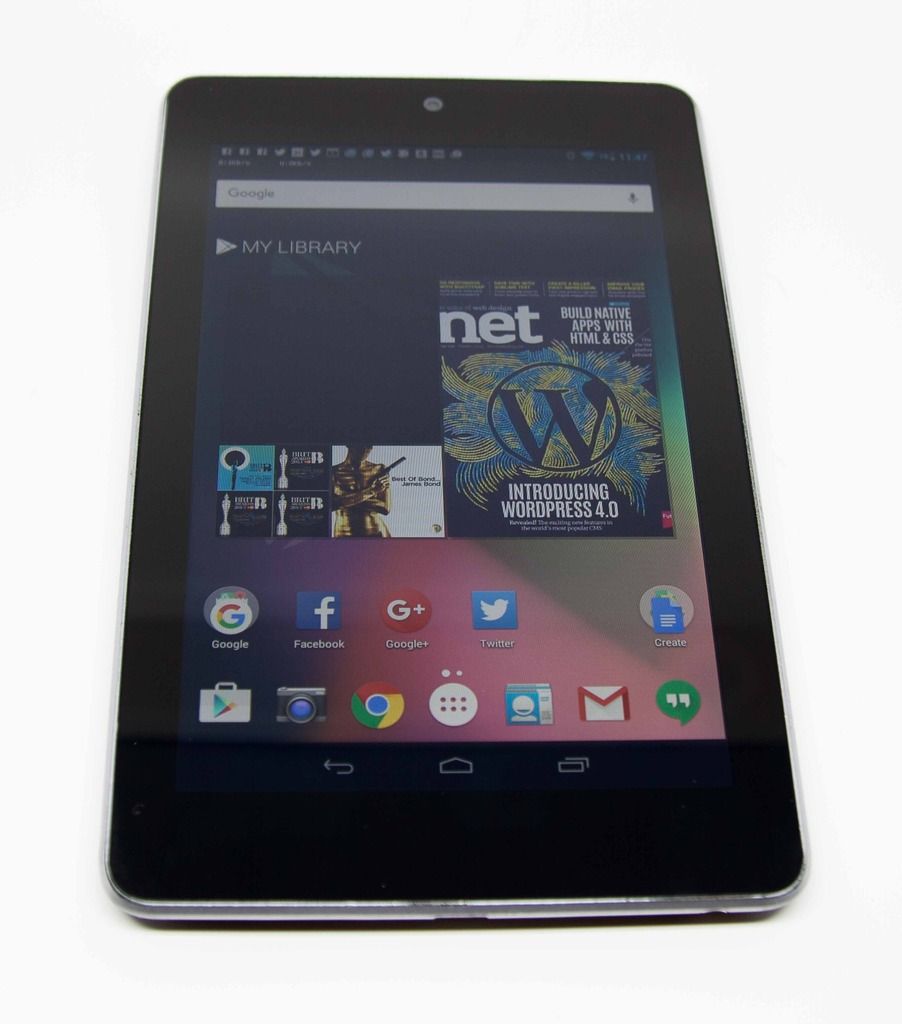
Android tablets were still a fledgling market in 2012 and to be frank the market was not in a good shape with few good choices of hardware. The Nexus 7 was a revelation in that it provided decent performance, pure Android, and, above all, a keen price (I'm sure I've heard/read reports that Google and/or Asus made little to no money on the tablet, with Google keen to get the product into as many people's hands as possible to show what Android tablets could do).
In December 2013 I bought myself a Nexus 7 from ebay. As I wasn't entirely sure how much I'd use a tablet I decided to go second hand and was planning to try and construct a working tablet from a couple being sold for spares on ebay. The tablet I ended up bidding on and winning cost me £56 and turned out to be a bit of a bargain. While it had been advertised as a faulty 16GB model, on receipt it turned out to be the 32GB variant. Also, contrary to the ebay listing, it appeared to be in full working order once I followed the instructions on Google's website for bringing back to life a Nexus 7 that had been allowed to run down its battery and not recharged for a while. That saved me at least £100 compared to what 32GB first generation Nexus 7s were selling for on ebay at the time.
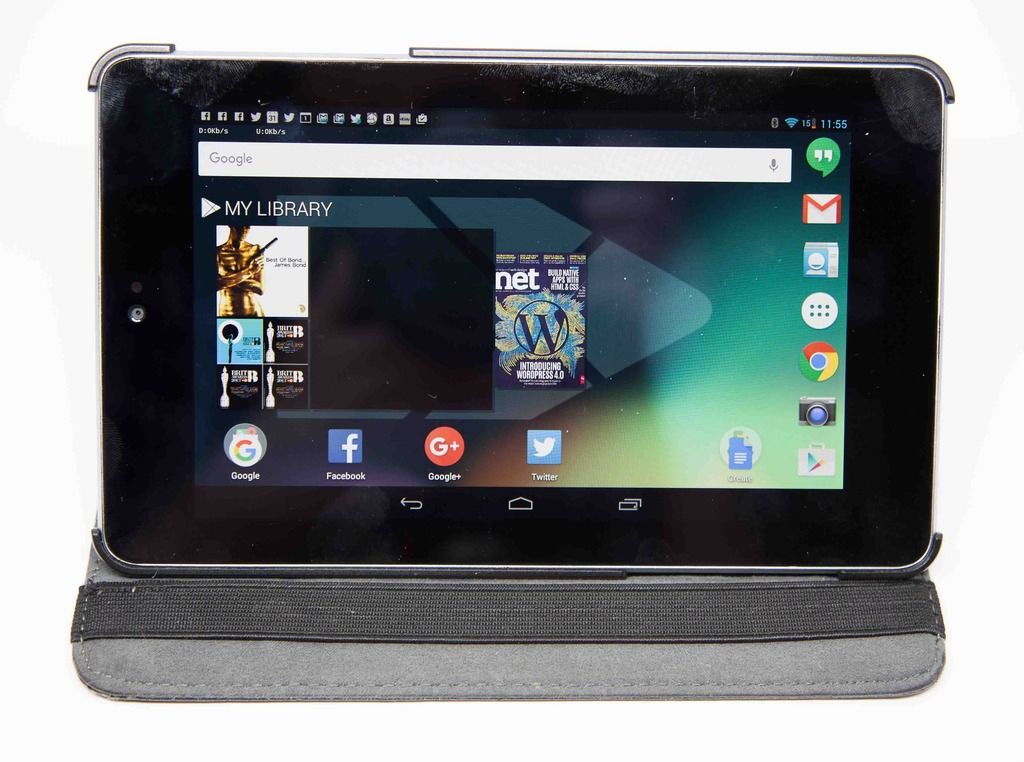
Once it was charged up I updated it to the latest version of Android available (one of the benefits of a Nexus device being that, for as long as the device is supported, you get OS updates pretty quickly) and it was a great little device for browsing the web when I couldn't use my laptop (normally when I had the cat on my lap) and as a media player for podcasts, video and films, plus a few short-lived goes at a few different games.
That was, of course, when I could actually use it. While I'd bought it so that I could figure out if I'd use a tablet or not, the wife seemed to be using it just as much as me, to the point that she eventually bought herself the 2013 version.
All was going swimmingly, until the launch of Android 5, codenamed Lollipop, around November 2014. Amongst the improvements the fifth version of Android was supposed to bring was better performance on low end devices. Unfortunately, this apparently didn't include the original Nexus 7. While my wife's 2013 model tablet seemed to take Lollipop in its stride, my 2012 edition was now beset by frequent slowdowns and lock-ups, often requiring a reboot to get things working again.
The main app I used on it, my podcast app Pocket Casts, became borderline unusable. I tend to listen to most podcasts at 1.6 times normal speed - due to the number I listen to I'd be months behind in listening to them otherwise - and this had pretty much worked fine when I was on the previous KitKat revision of Android. Now, however, the audio would frequently glitch - either cutting out for a few seconds or the audio stretching out and distorting. The app would also freeze, requiring a reboot to sort out.
Web browsing also became frustrating. What you'd have thought would be so processor-lite that it should run fine with three or four tabs turned into a chore. Video playback, whether from YouTube, or other apps like VLC, became unreliable. A sleepless night away from home for one of my wargaming events became more frustrating when the film I was trying to watch through Google Play kept glitching and freezing up to the point that if I hadn't been sharing the room with someone else who was sound asleep I'd probably have hurled the Nexus across the room.
In the end, I installed an Android 4.3 version of Cyanogenmod on it which brought performance most of the way back to what it had been, albeit still with occasional glitches and slowdowns that I did not recall having when the Nexus was previously on stock KitKat. Of course, with only subjective impressions of performance it's entirely possible that, after months of Lollipop's poor performance, I'm now far more sensitive to it than I was previously. I could probably try a few different ROMs for various point releases to see if they improved things but to be honest it'd be a lot of faffing around I don't really have time for.
Thus it was that while the Nexus was back in usable territory, I decided to begin searching for something newer (although that's a search that brings with it its own trials and tribulations which I'm sure I'll report on in the future).
Overall, considering its age, this is still a good device. With the lack of an SD card slot, the 32GB memory is a must if, like me, you plan to use your device away from home and so cannot be sure of reliable or decent speed WiFi connections. It's just a shame that you have to use the older OS if you want reasonable performance now.

No comments:
Post a Comment